Complete internal expansion rubber-flex chuck assembly for through-hole workpieces.
Through-Hole Rubber-Flex Expanding Collet Chuck
KORRETTO through-hole rubber-flex expanding collet chuck is used for internal expansion clamping of workpieces with open-through bores. The rubber-flex expanding element supports the workpiece from the inside diameter, while the chuck assembly provides the matched structure for mounting, actuation and repeat clamping. This page covers the complete through-hole expanding chuck assembly, not only the replaceable expanding collet body.
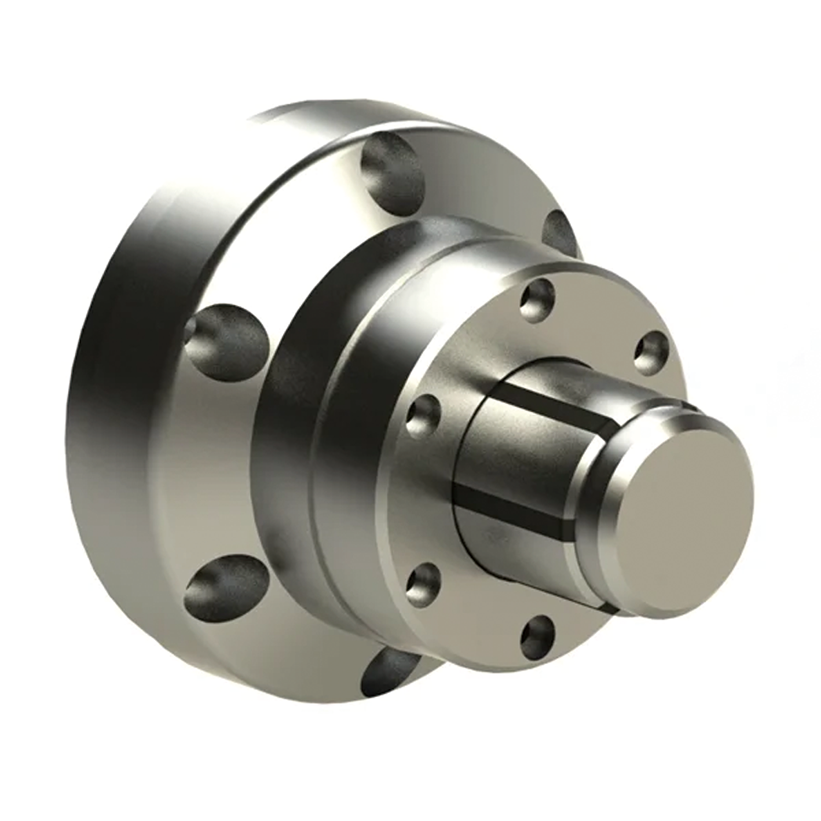
Product Overview
The through-hole rubber-flex expanding collet chuck is selected when the workpiece has an open bore and must be held from the inside. It is suitable for parts where the outside surface needs to remain accessible for turning, grinding, finishing or inspection.
Selection should confirm the bore diameter, bore tolerance, expansion range, support length, workpiece material, actuation method, draw force, clamping force, maximum speed and machine or fixture layout.
Key Features
| Feature | Description |
|---|---|
| Complete chuck assembly | Covers the matched internal expansion chuck structure, not only the collet body. |
| Through-hole internal expansion | Designed for workpieces with open-through bores. |
| Rubber-flex bore contact | Provides distributed support inside the workpiece bore. |
| Outside surface access | Useful when the outside diameter must remain open for machining. |
| Expanding mandrel application | Selected for bore-based clamping and repeat positioning. |
Typical Applications
- Through-hole bore workpieces
- Bore-located sleeves and rings
- Parts requiring outside-diameter machining
- Precision turning, grinding and finishing
- Internal expansion clamping fixtures
- Workpieces requiring repeat bore location
Technical Data and Dimensions
Use the drawing and parameter tables to check chuck structure, expansion range, stroke, draw force, radial clamping force, recommended workpiece tolerance, maximum clamping diameter and maximum speed.
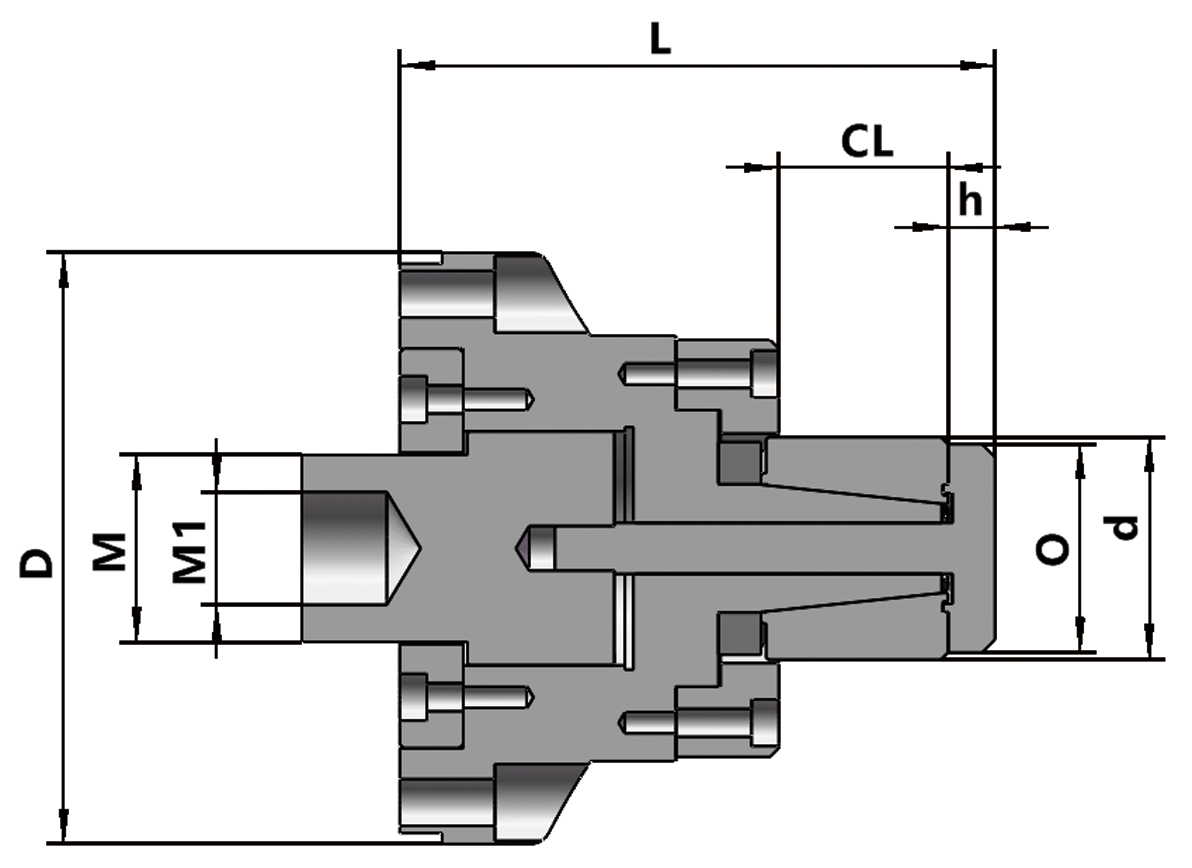
| Model | D (mm) | L (mm) | O (mm) | h (mm) | Expansion Range d (mm) | M |
|---|---|---|---|---|---|---|
| KB100 | 139 | 100 | 19 | 7.5 | 20–28 | M44×1.5 |
| KB110 | 139 | 110 | 25 | 11 | 26–38 | M44×1.5 |
| KB120 | 139 | 130 | 35 | 10 | 36–54 | M44×1.5 |
| KB130 | 139 | 140 | 49 | 11 | 50–80 | M44×1.5 |
| KB140 | 139 | 155 | 68 | 16 | 69–100 | M44×1.5 |
| KB150 | 230 | 195 | 97 | 16 | 100–130 | M44×1.5 |
| KB160 | 230 | 220 | 125 | 25 | 130–160 | M44×1.5 |
| KB170 | 230 | 245 | 156 | 29.5 | 160–200 | M44×1.5 |
| Model | M1 | Collet Used | Type | Stroke (mm) | Max. CL (mm) | Recommended Workpiece Tolerance (mm) |
|---|---|---|---|---|---|---|
| KB100 | M30×1.5 | SB100 | Pull-back | 1.5+2 | 22 | ±0.25 |
| KB110 | M30×1.5 | SB110 | Pull-back | 1.5+2 | 26 | ±0.25 |
| KB120 | M30×1.5 | SB120 | Pull-back | 1.5+2 | 43 | ±0.25 |
| KB130 | M30×1.5 | SB130 | Pull-back | 2+2.5 | 49 | ±0.3 |
| KB140 | M30×1.5 | SB140 | Pull-back | 2.5+3 | 59 | ±0.4 |
| KB150 | M30×1.5 | SB150 | Pull-back | 3+3 | 86 | ±0.5 |
| KB160 | M30×1.5 | SB160 | Pull-back | 3+3 | 96 | ±0.5 |
| KB170 | M30×1.5 | SB170 | Pull-back | 3+3 | 94 | ±0.5 |
Related Rubber-Flex Pages
FAQ
What is a through-hole rubber-flex expanding collet chuck used for?
It is used for internal expansion clamping of workpieces with open-through bores.
Is this the same as the through-hole expanding collet body?
No. This page covers the complete expanding chuck assembly. The replaceable through-hole expanding collet body is listed separately.
Is this an outside-clamping rubber-flex chuck?
No. This product clamps from the inside diameter by expansion. Outside-clamping rubber-flex chucks are handled separately.
When should I choose this chuck?
Choose it when the workpiece has an open bore, the outside surface must remain accessible and internal expansion clamping is required.
What should be checked before selection?
Check bore diameter, bore tolerance, support length, expansion range, actuation method, draw force, clamping force and maximum speed.
What information is needed?
Provide the workpiece drawing, bore size, bore tolerance, material, machining process, required support length, machine layout and accuracy requirement.